
Smart Home Automation for New Flat Owners in India: A Step-by-Step Beginner's Setup Guide (2026)
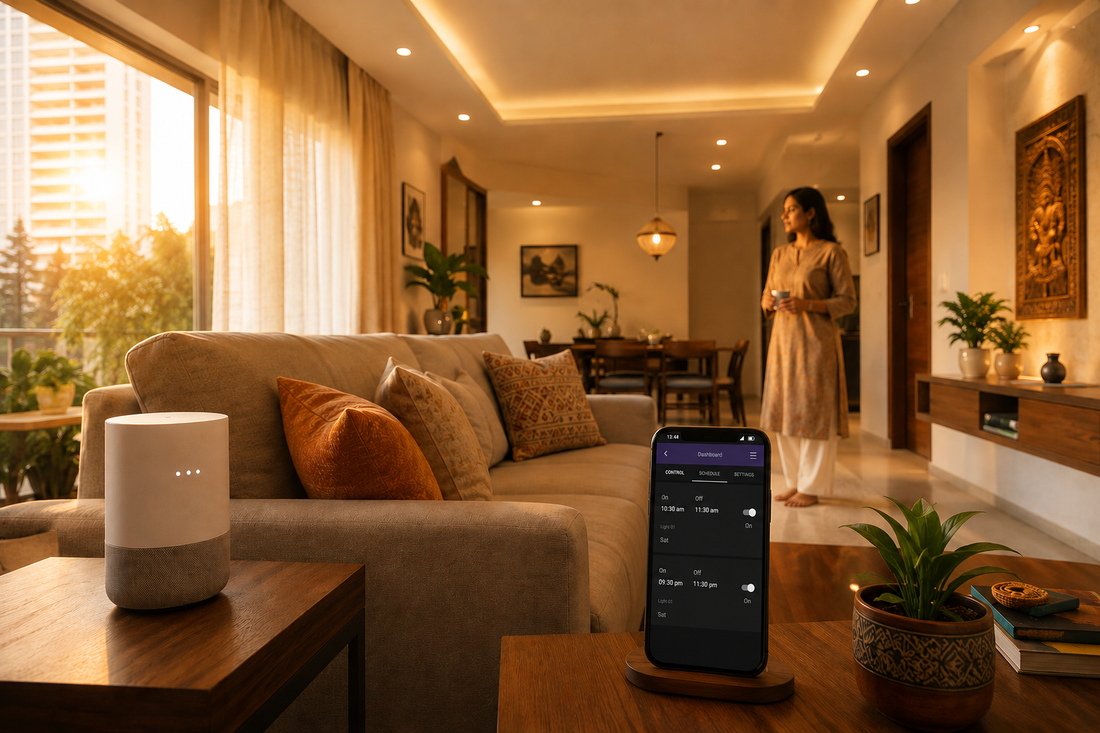
Getting Started With Your Smart Home Journey
Moving into a new flat is one of life's most exciting transitions, and for many Indians picking up the keys to their first home, it also presents a rare opportunity: the chance to build their living space exactly the way they want it from the very beginning. Smart home automation gives new flat owners the ability to control lighting, security, climate and appliances through a connected ecosystem - saving time, reducing effort and adding a layer of comfort that older homes rarely offer.
If the idea of automating your home feels overwhelming, you are not alone. Most beginners assume it requires complicated wiring, expensive professionals or a background in technology. In reality, setting up a smart home in India today is far more accessible than it has ever been. This guide walks you through the process in a logical, approachable order.
Understanding the Basics Before You Buy Anything
What a Smart Home Actually Means
A smart home is simply a living space where everyday devices - lights, fans, locks, cameras and appliances - are connected to a central system you can control through your smartphone, voice commands or automated schedules. Devices communicate over Wi-Fi, Bluetooth, Zigbee or Z-Wave protocols, depending on the brand you choose.
Choosing Your Smart Home Ecosystem
Before purchasing a single device, you need to decide which ecosystem you want to build around. The most widely supported options in India are Amazon Alexa, Google Home and Apple HomeKit. Each has its strengths, and the right choice depends on which smartphones and devices your household already uses.
If your family primarily uses Android phones, Google Home tends to feel the most seamless. If you are invested in Apple products, HomeKit offers the tightest privacy controls. Amazon Alexa sits comfortably in the middle, with the broadest device compatibility available at present.
Choose one ecosystem and stick to it. Mixing ecosystems is possible but adds unnecessary complexity for a beginner.
Building Your Smart Home in Stages
Stage One: Connectivity and Control
The basis of every smart home is a reliable internet connection combined with a strong router. Before automating anything, ensure your flat has Wi-Fi coverage in every room. If your router does not reach certain corners, consider a mesh Wi-Fi system, which uses multiple nodes placed around the home to eliminate dead zones.
Once your connectivity is sorted, install your smart home hub or speaker. Devices like the Amazon Echo or Google Nest Hub serve as the central command point. Place it in the living area where you spend the most time, and connect it to your chosen ecosystem app on your phone.
Stage Two: Lighting
Smart lighting is the most impactful and cost-effective entry point for beginners. Smart bulbs screw into your existing light fittings and connect to your Wi-Fi network without any rewiring. You can then control them through your phone or by voice.
Begin with the rooms you use most frequently - the bedroom and living room are ideal starting points. Set up schedules so lights dim automatically in the evening, or turn on before you wake up. Many flat owners also appreciate the ability to change the colour temperature of bulbs, shifting from cool white during the day to warmer tones at night, which can make a genuine difference to how relaxed a room feels.
Stage Three: Smart Plugs and Appliances
Smart plugs are small adapters that sit between a regular appliance and the wall socket, giving you remote control over anything plugged into them. They are inexpensive, require no installation, and are a safe way to automate devices that are not natively smart - such as table fans, floor lamps or a water heater.
For new flat owners in India, smart plugs are particularly useful for managing the geyser. You can schedule it to switch on thirty minutes before your usual shower time and switch off automatically, avoiding the common scenario of forgetting to turn it off before leaving for work.
If your budget allows, you can invest in smart switches that replace your existing wall switches entirely. These allow you to control wired fittings like ceiling fans and built-in lights through your phone or voice, without needing smart bulbs in every socket.
Security and Safety Automation
Video Doorbells and Smart Locks
For flat owners, security is often a top priority. A video doorbell replaces your existing doorbell and adds a camera so you can see, hear and speak to whoever is at your door - even when you are away from home. Most models store footage in the cloud and send alerts to your phone when motion is detected.
Smart locks remove the need for physical keys and allow you to grant access to family members, domestic help or guests using a PIN code or a smartphone. Many models also log entry and exit times, which gives you a record of who has accessed your flat and when.
Smoke and Air Quality Monitors
India's urban air quality is an ongoing concern, and smart air quality monitors can alert you when indoor pollution levels rise above comfortable thresholds. Similarly, smart smoke detectors connect to your phone and sound alerts even when you are away, giving you earlier warning than a traditional alarm alone.
Making Your Smart Home Work Together
Once you have your devices set up individually, the real value comes from creating routines that combine them. With voice control home automation, a "Good Morning" routine might gradually brighten your bedroom lights, switch on the geyser, and start your air purifier all triggered by a single voice command or a set time each day.
A "Leaving Home" routine could switch off all lights, lock the front door and arm your security camera with a single tap. These routines are created through your ecosystem app and require no technical knowledge beyond pointing and clicking.
Start with two or three routines and add more as you grow comfortable. Over time, your home begins to work around your lifestyle rather than the other way around.
Conclusion
Setting up a smart home as a new flat owner in India does not have to be complicated or expensive. By building in stages - connectivity first, then lighting, then plugs and security - you create a system that grows with you at a pace that suits your budget and confidence. Smart home automation, when approached thoughtfully, transforms a standard flat into a living space that is genuinely more comfortable, more secure and easier to manage every single day.


